WORLDMODEL™ REFERENCE ARCHITECTURE
Patent pending
WorldModel™A governed operating architecture for intelligent physical environments.
The WorldModel™ architecture brings policy-governed decisions, consent, multi-system coordination, safety intervention and auditability into a single reference design. Shared operational state supplies context for those decisions; it is one component of the architecture, not the complete framework.
The complete WorldModel framework, published definitions and wider reference material are available at WorldModel.global .
View all five architecture diagramsCANONICAL REFERENCE AND IMPLEMENTATION
One architecture. Distinct responsibilities.
Published reference architecture: ten architectural layers and eleven cross-cutting policies, as defined at WorldModel.global. The layers and policies describe the complete architecture.
The installation brief identifies the participating systems, adapters, permissions, resilience and verification. This makes the architecture actionable for the venue and clear for its designers and technical team.
The architectural reference is authored by Maris J. Ensing. WorldModel.Global documents the current specification. Mad Systems establishes the software, connected systems, implemented capabilities and acceptance evidence for each project.
WHAT IT MEANS FOR PEOPLE
Personalization with continuity.
A visitor’s permitted language and accessibility choices can continue between participating interactions. A guest who selects Spanish and captions can carry those choices into the next gallery without repeating the selection. The venue defines which touchpoints share that context.
Consent remains an operating condition. The architecture defines how the system uses the necessary information, applies the current permissions and responds when those permissions change.
Accessibility, approved information and sensory limits belong in the design from the beginning. They guide how the available systems are coordinated.
SEE THE WHOLE ARCHITECTURE
Five diagrams.
A connected view.
Explore the layers, policies, operating cycle, federation and technology landscape. Each diagram has a dedicated view, an enlargement and a downloadable vector copy.
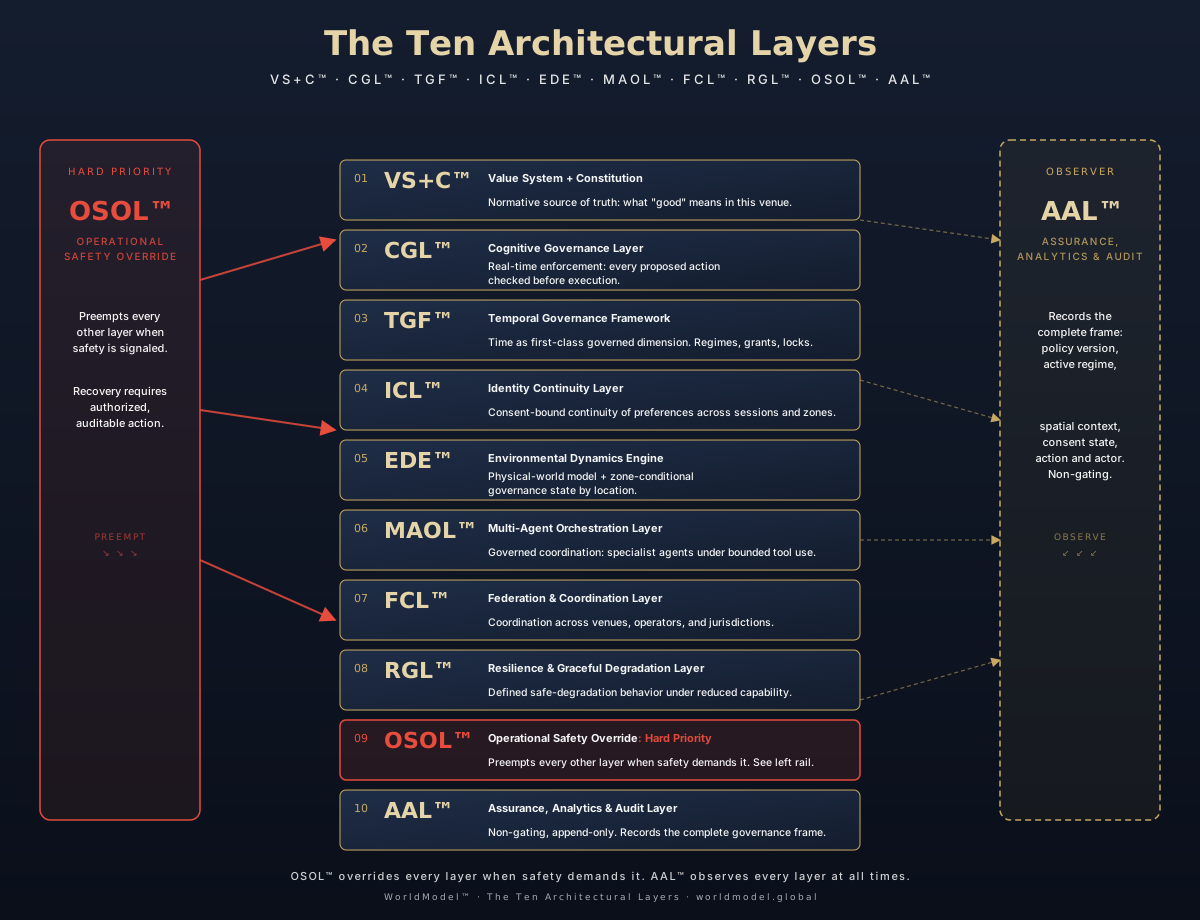 DIAGRAM 01
The ten architectural layers
Responsibilities, authority and the relationships between them.
View diagram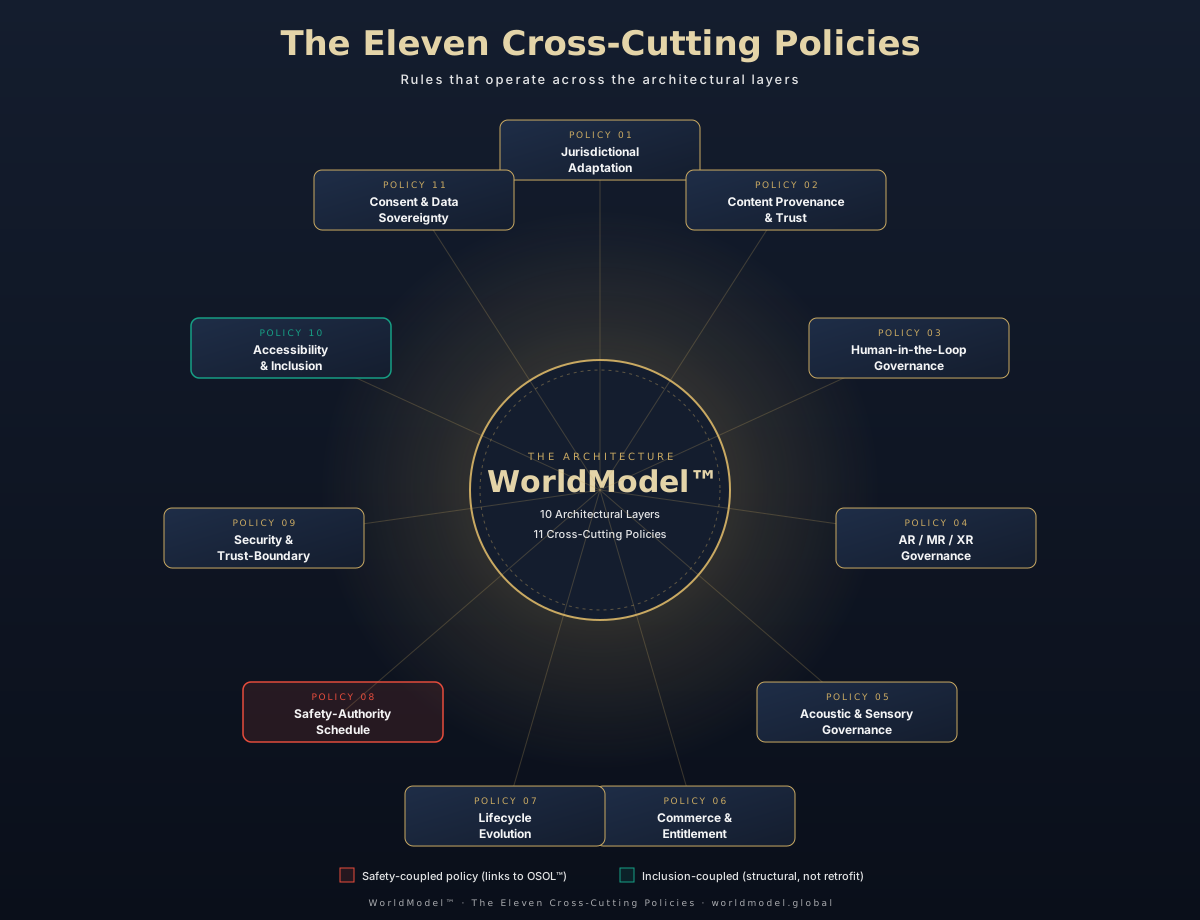 DIAGRAM 02
The eleven cross-cutting policies
Consent, accessibility and the rules that apply across the architecture.
View diagram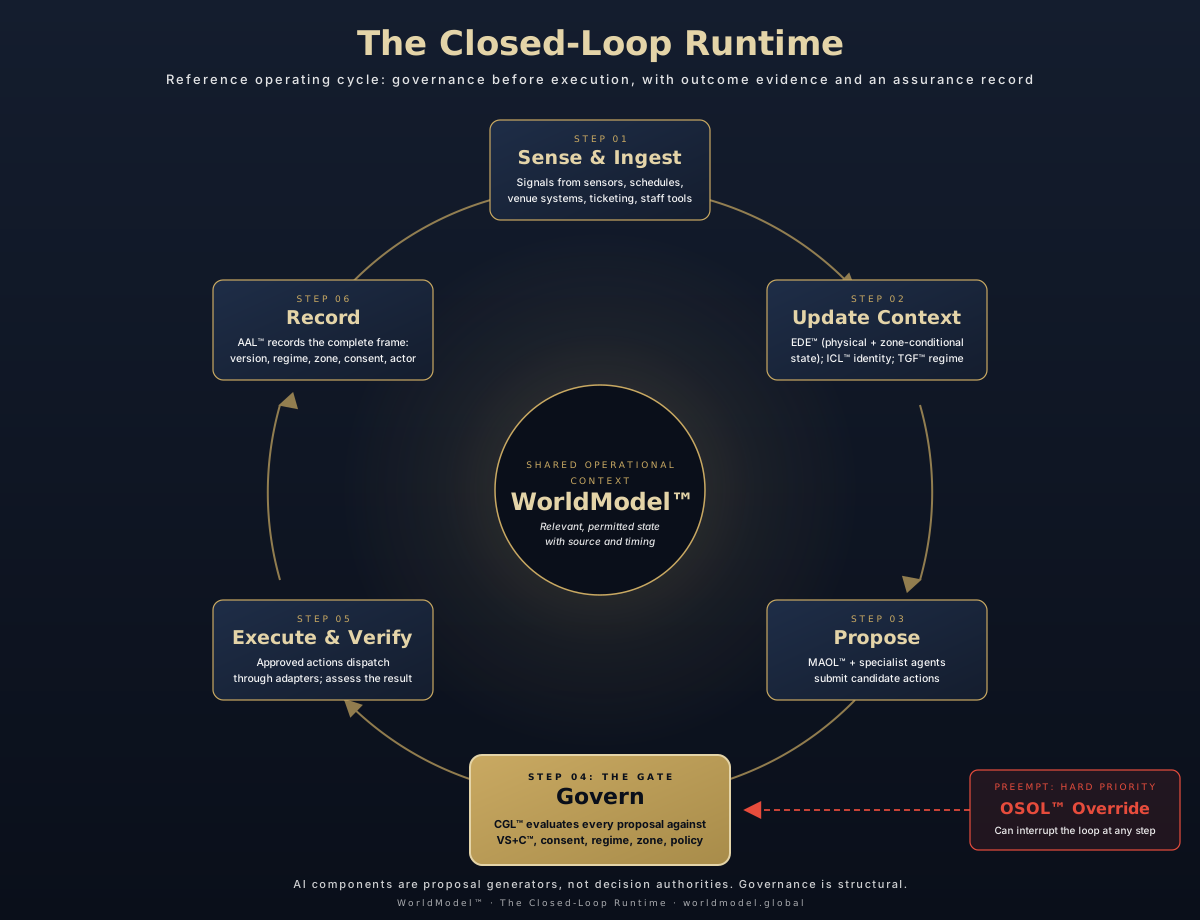 DIAGRAM 03
The closed-loop runtime
From current context to a governed action and the next observation.
View diagram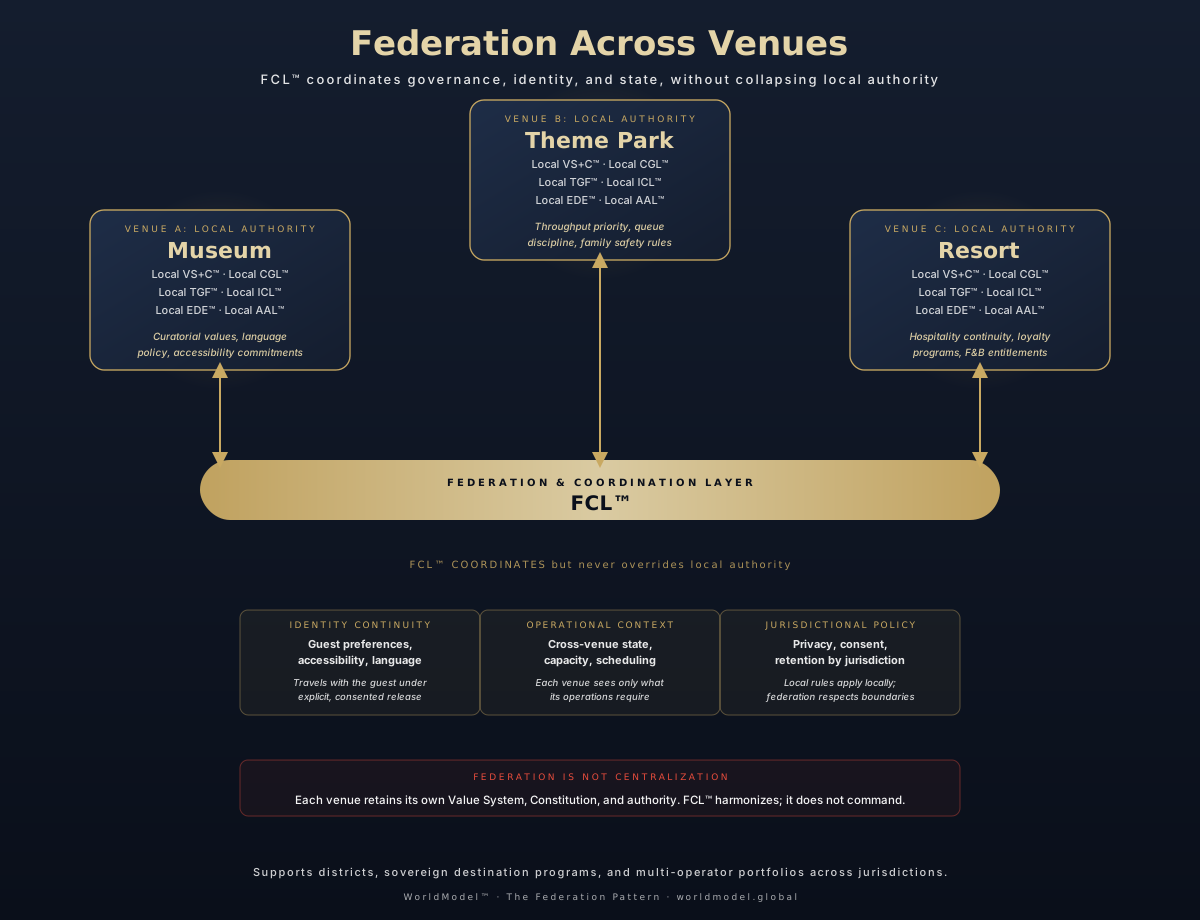 DIAGRAM 04
The federation pattern
Coordinate participating venues while preserving their local authority.
View diagram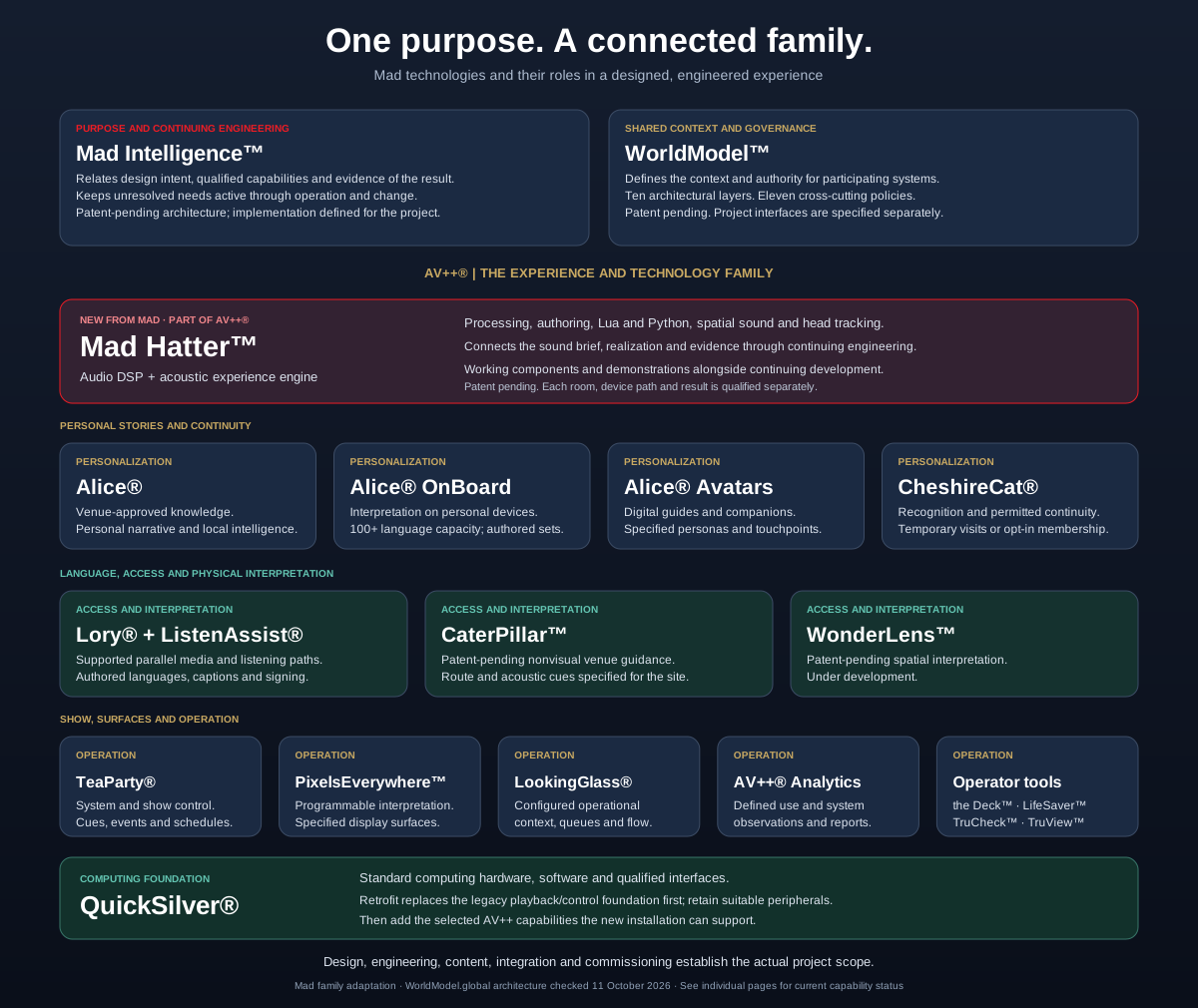 DIAGRAM 05
The technology landscape
How Mad’s individual technologies connect with the wider architecture.
View diagramA CONNECTED VENUE
Make the systems work from the same context.
A destination may contain media, lighting, sound, signage, show control, accessibility services, ticketing and operational tools from many suppliers. Each contributes to what people experience.
WorldModel™ provides an architectural approach for coordinating those contributions. Relevant conditions, permissions and operating rules are made available through defined interfaces so proposed actions can be considered in the context of the whole venue.
The aim is a coherent experience across rooms, devices, operators and future upgrades, with the authority behind each decision kept explicit.
TEN DEFINED RESPONSIBILITIES
A structure for decisions that matter.
The ten layers cover the venue's values and constitution, real-time governance, time, identity continuity, environmental state, agent coordination, federation, resilience, safety override and assurance.
Eleven cross-cutting policies operate across these responsibilities. They address matters such as consent, accessibility, content provenance, sensory governance and lifecycle evolution.
Governance evaluates a proposed action before execution. Designated safety actions have hard priority. Assurance records the decision and its context without holding up execution.
MAD INTELLIGENCE
Connect governed action to lasting design intent.
The WorldModel™ architecture defines governed coordination, including the context and authority for action. Mad Intelligence™ connects that governed action to the designer’s intended result, qualified resources, outcome-specific evidence and permitted response.
Together, these responsibilities support an environment that can respond intelligently while remaining accountable to its purpose and authority. They can run within the same implementation.
Mad Hatter™ brings the continuing intent, realization, verification and repair loop to the acoustic domain. QuickSilver® provides a distributed compute foundation within the AV++® family.
INTEGRATION AND LIFECYCLE
Build on the systems your venue needs.
WorldModel OS defines the common interfaces through which existing systems exchange relevant state, request outcomes and receive governed actions. Integration can be planned around the capabilities and constraints of the particular installation.
Defined operating modes address reduced capability, disconnection and recovery. Federation supports coordination across venues and operators while retaining local authority.
Early design decisions determine how much a venue can adapt later. The architecture gives owners, designers and integrators a shared basis for specifying the experience and its continuing operation.
ENGINEERING DETAILSpecify it: WorldModel™ configuration.
Open the engineering detailClose this sectionLook for the red circuit symbol for engineering detail.
| Parameter | Specification scope |
|---|---|
| Reference structure | 10 layers and 11 cross-cutting policies, as published at WorldModel.global. |
| Purpose | A governed operating architecture combining consent, authority, coordination, safety intervention and accountability. Shared operational state is one component. |
| Project scope | Identify participating systems, state, relationships, permissions, data retention, adapters and operating boundaries. |
| Implementation | A reference architecture. The project establishes which patterns are implemented, their interfaces and their acceptance evidence. |
| Source | WorldModel.global is the maintained reference for layer definitions, policies and architecture diagrams. |
LET’S BUILD WHAT COMES NEXT
Bring governance into the first brief.
Tell us what your venue should make possible, which choices should follow the visitor and which limits must always govern action.
Plan with Mad