Lory®
Accessible, multilingual, parallel media delivery for physical venues
PERSONAL MEDIA ALONGSIDE THE SHARED EXPERIENCE
More ways to receive the story.
Lory® is Mad’s platform for accessible and multilingual parallel media delivery. It brings approved audio, captions, sign-language video and other content to supported personal devices alongside the main presentation. ListenAssist® provides the associated assisted-listening path.
The experience begins with the visitor’s needs and the authored media: an audio description, a translated narration, captions, a sign-language interpretation or a calmer version. The chosen phone, browser, listening connection and venue system must support the specified path.
A visitor should be able to understand how to connect, choose the available format and ask for help. The project also defines how guests without a suitable personal device receive the agreed access provision.
LANGUAGE AND ACCESS IN THE DESIGN
Specify the experience people need.
Lory combines the content workflow with the delivery infrastructure. The venue selects the languages and formats to author, the timing relationship to the shared show and the visitor devices it intends to support. These choices are part of design, testing and operation.
| Format | What is specified |
|---|---|
| ListenAssist® | Exhibit audio through a supported personal listening path, including compatible hearing devices connected through the selected phone, receiver or interface. |
| Captions and subtitles | Authored text delivered to a supported personal display, with the presentation timing tested against the shared show. |
| Sign-language video | Reviewed interpretation in the sign language selected for the audience. Sign languages and their content sets are specified individually. |
| Multilingual media | Approved narration and interpretation in the venue’s authored languages. The published demonstration and the delivered venue content can have different language sets. |
| Calmer presentation options | Authored alternatives with the agreed pacing, audio level, transitions or background sound for visitors who prefer a lower-stimulation experience. |
| Electronic Braille integration | A roadmap direction. The device interface, authored content and complete delivery behavior require further development and qualification. |
PART OF LORY®
ListenAssist®
ListenAssist® connects the exhibit audio with the visitor’s selected assisted-listening equipment. A supported phone or receiving device can carry the audio to compatible headphones, hearing aids or cochlear-implant processors through its supported connection.
A Bluetooth label alone does not establish compatibility. The complete chain is selected and tested: venue delivery, network, phone or receiver, browser or software, listening-device connection and synchronization with the exhibit. Individual volume control and the appropriate media are included in the intended path.
For a new venue or upgrade, Mad can assess this approach alongside the other required access provisions. Any decision to replace an existing assisted-listening system follows the project’s accessibility requirements and verification of the proposed alternative.
ListenAssist® is a registered trademark, Reg. No. 8,316,282. The IP register distinguishes registered marks, issued patents and pending work.
TECHNICAL DETAILQualify the complete path.
Open the engineering detailClose this sectionLook for the red circuit symbol for engineering detail.
Lory can be specified for a dedicated QuickSilver delivery system or integrated into a wider QuickSilver installation. Existing external show control can participate through the synchronization interfaces included in that project. The Lory application still needs its specified computing and delivery path.
The implementation defines WiFi coverage and capacity, supported devices and browsers, QR or NFC entry, approved content, synchronization references, reconnection behavior and the listening-device interface. Existing network infrastructure can be retained where it meets those requirements.
Synchronization is an end-to-end performance requirement. The selected device, receiver, buffer behavior and listening connection affect the result. Timing is tested with the actual supported configuration.
WorldModel™ is a separately defined integration where included. Its permissions, session state and delivery rules are connected to Lory through the project’s specified interfaces.
Personal media alongside the shared experience.
Lory connects authored language and access options with the venue’s playback and the supported devices people use.
Explore QuickSilver ↗Discuss the audience, authored languages and formats, existing show system and personal devices you need to support. Mad can define the Lory and ListenAssist delivery scope and the evidence required for that installation.
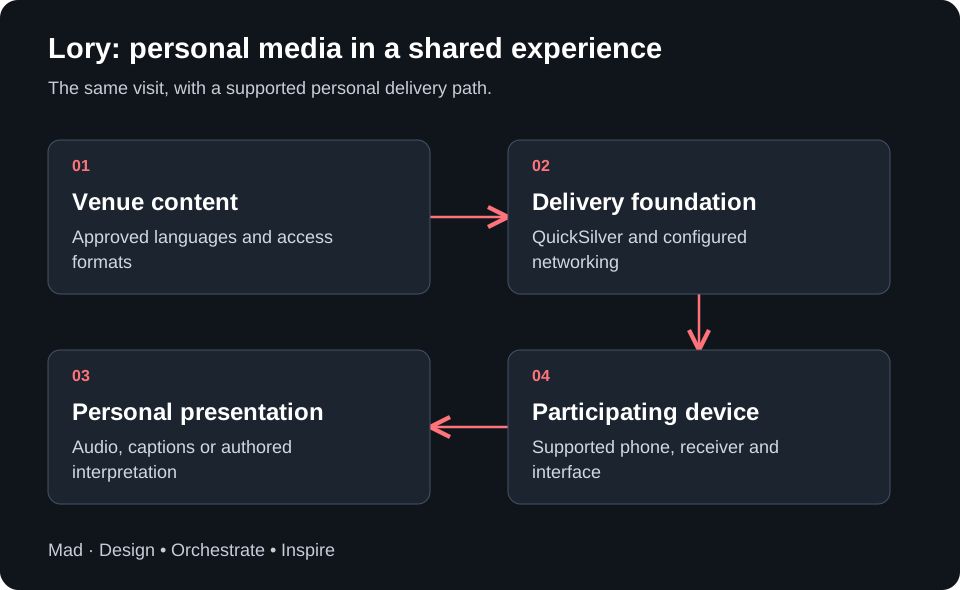
ENGINEERING DETAILSpecify it: Lory® configuration.
Open the engineering detailClose this section
| Parameter | Specification scope |
|---|---|
| Role | Parallel and personal media delivery alongside the shared venue experience. |
| Foundation | A dedicated QuickSilver delivery system or a specified part of a wider QuickSilver installation. |
| Visitor access | Supported phones, receivers and browsers. QR-code or near-field communication entry is selected for the experience. |
| Media | Authored multilingual audio, captions and subtitles, sign-language video and the selected personal listening interface. |
| Network and timing | Plan wireless coverage and capacity, synchronization references, buffers and reconnection behavior. Establish timing with the actual phone or receiver and listening connection. |
| Development boundary | Electronic Braille integration is a roadmap direction. Device support and timing are configuration-specific; no universal synchronization figure is claimed. |