CARE AND INSIGHT
CheshireTracks™
Understand the space.
Verify the picture.
Camera-based occupancy heat maps and visual checks of exhibit output, designed to give a venue useful observations without identifying its visitors.
WHAT IT DOES
See where the experience needs attention.
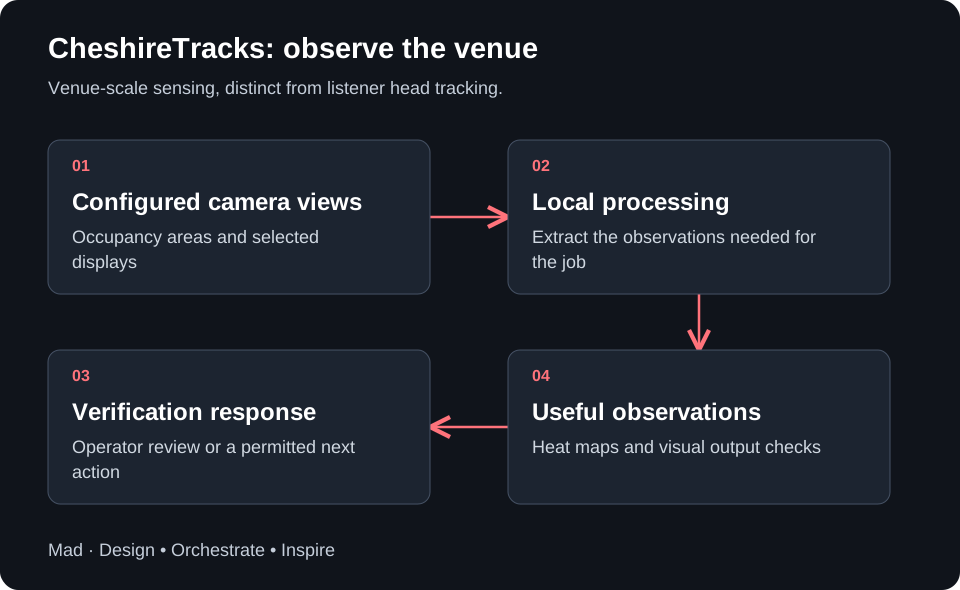
CheshireTracks™ is being developed to turn overhead camera observations into occupancy heat maps and movement information: where people gather, where they pause and which parts of a space receive little use. Those observations help a venue assess layout and operation.
The same verification story includes visual checks of displays and projection surfaces. A player reporting that it is online does not establish that the right picture is reaching the exhibit. CheshireTracks compares the observed output with the reference and conditions defined for that view, so a blank, missing or unexpected presentation can be brought to the operator’s attention.
PRIVACY IN THE SENSING DESIGN
Understand the room without recognizing the people.
The design processes camera images locally and releases the occupancy or output observations needed for the job. Individual recognition and the retention of visitor photographs or video are excluded from the CheshireTracks sensing role. The venue specifies what aggregate observations it retains, for how long and who may use them.
CheshireCat® recognition is a separate, optional capability for visitors who choose a personal experience. It is not a prerequisite for an occupancy heat map.
ONE VERIFICATION STORY
The picture, the sound and the intended result.
TruCheck™ brings the verification capability together. CheshireTracks supplies visual and occupancy observations. Mad Hatter™, with MTCL™, the Microphone That Cannot Listen, supplies acoustic measurement features. TruView™ gives an operator a remote visual inspection.
With Mad Intelligence™, the relevant evidence is connected to the intended outcome and the next permitted action. Automatic measurements and operator observations remain distinct, so the system can identify what is known and what still needs attention.
ENGINEERING DETAILSpecify the observation, privacy boundary and response.
Open the engineering detailClose this sectionLook for the red circuit symbol for engineering detail.
| Parameter | Scope |
|---|---|
| Input | Configured overhead camera views and views of selected display or projection surfaces. |
| Outputs | Aggregate occupancy and movement observations; checks against a defined visual-output reference. |
| Processing | Local image processing. No individual recognition in this sensing role. |
| Retention | No retained visitor photographs or video. Aggregate-record lifetime is defined by the venue. |
| Acceptance | Coverage, lighting conditions, occlusion, expected image, confidence and response to an unavailable observation are established for the installation. |
| Integration | Developing visual evidence path for TruCheck and Mad Intelligence; operator review through the specified venue interface. |
Occupancy does not establish a person’s interest, comprehension or satisfaction. Visual evidence establishes only the configured output check.
TWO DISTINCT CAMERA ROLES
CheshireTracks is not CTCS™.
| CheshireTracks™ | CTCS™ | |
|---|---|---|
| Purpose | Venue-scale occupancy and visual output checks. | The Camera That Cannot See: a listener’s head-position and orientation input for Mad Presence™. |
| Information supplied | Aggregate occupancy and configured visual observations. | Head-pose measurements, with a constrained output design. |
| Development focus | Views across a room and its exhibits. | A dedicated single-listener pose node. |
| Recognition | No individual recognition. | No individual recognition or image-stream output in the node design. |
LET’S BUILD WHAT COMES NEXT
What should the venue be able to verify?
Bring the exhibit, the expected output and the operating question. We will define a useful observation and the evidence needed to rely on it.
Start a conversation