Mad Systems works with owners, architects, exhibit designers, planners, and integrators at the earliest stages of museums, visitor centers, attractions, and intelligent environments to define the infrastructure, compute, control, accessibility, personalization, and lifecycle architecture that determines whether a venue will work now and remain supportable over time.
Traditional AV delivers predictable, repeatable baseline infrastructure: playback, routing, switching, timing, control, and show execution. This is the foundation of every project we deliver, built on decades of delivery discipline.
AV++® replaces Traditional AV as the preferred architecture when future intelligent behaviors may be needed. It delivers everything Traditional AV delivers today, plus distributed compute, non-proprietary hardware, IT-aligned serviceability, and upgrade paths for recognition, personalization, and multilingual delivery. Wireless deployment where appropriate.
WorldModel™ adds governed AI at site-wide venue scale. Constitutional constraints, seven governance layers, privacy by design, and auditable operations for destination-scale intelligent environments.
AV++® governs AI at the micro deployment level.
WorldModel™ governs AI at the macro, site-wide level.
Find your stakeholder path:
Non-proprietary hardware · IT-based architecture · Remote support · 15-20+ year lifecycles · Governed AI · Privacy by design
Designed for long-lifecycle deployment, predictable operation, and supportable change.
Three tiers. One relationship. Start with predictable, repeatable delivery. Add distributed compute and upgrade paths when ready. Scale into governed AI at venue or destination level.
Playback, routing, switching, timing, control, and show execution. Professional-grade AV design, engineering, integration, and support. The foundation of every project we deliver.
AV++® delivers everything Traditional AV delivers, plus distributed compute, non-proprietary IT-aligned hardware, 15-20+ year lifecycles, and upgrade paths for recognition, personalization, and governed AI when ready.
AV++® governs AI at the micro deployment level.
AV++® Ecosystem →The full AV++® ecosystem governed by WorldModel™. Constitutional constraints, seven governance layers, privacy by design, and auditable operations for destination-scale intelligent environments.
WorldModel™ governs AI at the macro, site-wide level.
WorldModel™ →Some projects require capabilities that predictable, repeatable delivery alone cannot provide: distributed compute across hundreds of endpoints, real-time state awareness, multilingual logic, accessibility behaviors, policy-bound decisioning, and auditable operations. These requirements do not replace Traditional AV. They extend it.
Traditional AV delivers. AV++® preserves options and adapts. WorldModel™ governs at scale.
Where site conditions allow, AV++® can support wireless deployment pathways, reducing conduit and cable runs, simplifying design and documentation, and lowering implementation effort. Wireless design is always validated through engineering, RF assessment, and reliability requirements.
These components run on AV++® and scale into site-wide governance through WorldModel™. Every technology runs on non-proprietary, IT-based hardware. Remotely managed. Field-serviceable. Designed for 15-20+ year operation without forklift upgrades.

The non-proprietary, node-based AV backbone enabling the entire AV++® ecosystem. Wired or wireless, venue-scale.
Learn more →
AI Virtual Docents — context-aware guidance and storytelling with multilingual delivery and accessibility modes.
Learn more →
Fully anonymous recognition — it knows what you want, not who you are. Sub-second response, no internet required, no biometric data stored. Operates completely isolated with zero cloud dependency.
Learn more →
Flexible system and show control — coordinating timing, cues, power states, and routines across complex environments.
Learn more →
Multi-language interpretive content delivered to visitors' own smart devices for self-guided tours.
Learn more →
Guest-level operational intelligence for greeting, routing, and balancing visitor flow.
Learn more →Anyone can add AI to a venue. The question is: who governs it? WorldModel™ is the constitutional operating architecture for intelligent physical environments. Every AI decision passes through governance layers, every guest interaction respects consent, every data flow follows privacy-by-design principles. Governance means declared priorities, auditability, and operational guardrails, not black-box personalization.
RFP-ready governance language available — see The World Model publication or contact us for specification templates.
Both publications describe capabilities that no competitor has — or is even thinking about. Here's what's waiting inside.
Visitors set their own sensory boundaries: volume, flashing lights, crowd density, pacing. The venue adapts in real time. Accessibility as a first-class design layer, not an afterthought.
Inclusion, diversity, equity, and accessibility are integrated into the infrastructure, not bolted on. CaterPillar™ spatial audio homing for blind and low-vision visitors. Lory® ListenAssist™ streaming to hearing aids and cochlear implants. Sign language video. Braille-compatible output. Neurodivergent-friendly calm media modes. These are not accommodations. They are how the system works.
Your phone's AI talks to the venue's AI to determine your settings — language, depth, pace, comfort — without forms, accounts, or oversharing. The visitor stays in control.
Consent-based real-time sensing. A guide system slows its pace when it detects confusion. An attraction offers a calm moment when it detects stress. All governed. All opt-in.
Sound treated as architecture, not afterthought. Room mix, personal mix, and the dignity of choice — because intelligibility is inclusion, and sound bleed is a design failure.
Prove age, membership, or accessibility needs without handing over documents. Seven governance layers — from constitutional values to assurance and audit — all governed, all private.
It's easy to prototype a personalized exhibit. It's exponentially harder to build an operating system for 500 devices, multi-jurisdiction privacy, and drift detection. We already built it.
"Language is runtime. Inclusion is the default. Comfort is access. Phones are partners. Surfaces are canvases. Decisions are governed. Upgrades are normal."
— The final claim of The World Model, Chapter 42
Two published works — both #1 Amazon bestsellers — define the architectural patterns for governed venue intelligence. Used as reference material by operators, consultants, and procurement teams worldwide.

AI, Privacy, and World Models — the strategic framework for venue transformation. Make the business case with confidence.

The complete technical reference for privacy-forward venue intelligence. Implementation patterns across 40+ verticals.
Vendor-neutral by design. Both publications present WorldModel™ as an open architectural framework. Mad Systems has built the production-ready technology — QuickSilver®, Alice®, CheshireCat®, and the complete AV++® ecosystem — that implements every pattern the books describe.

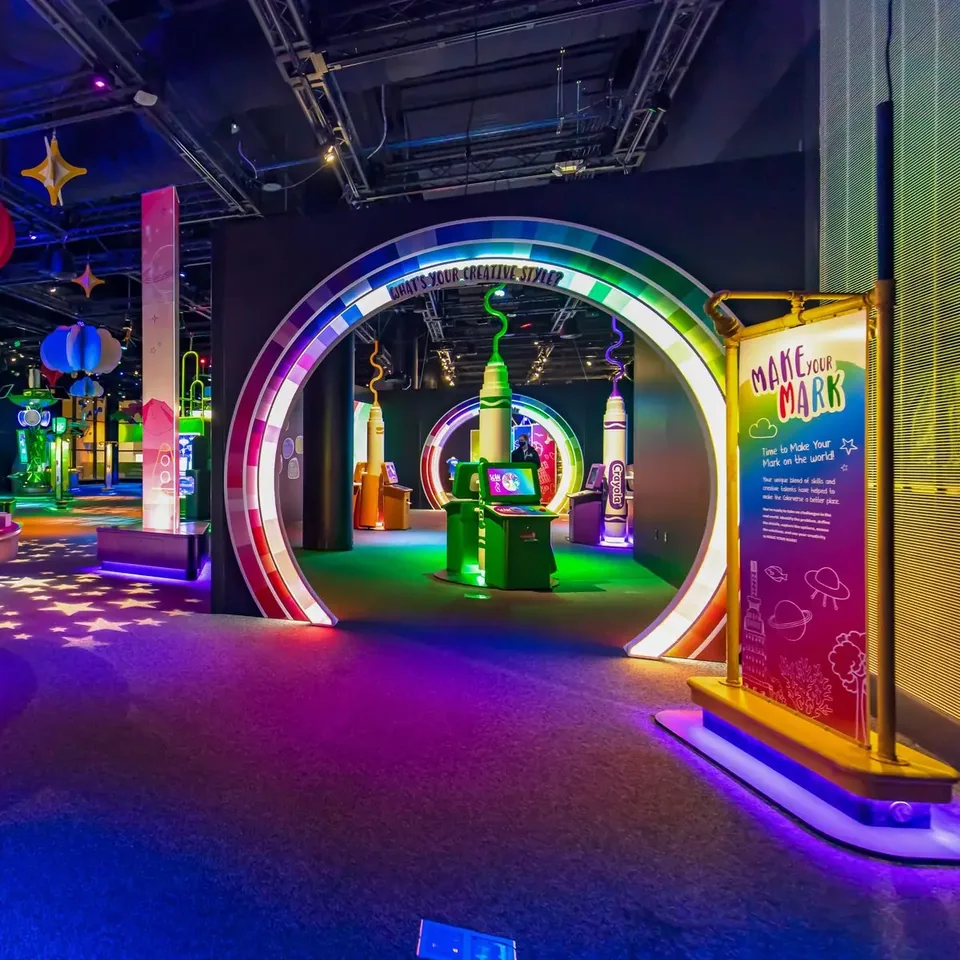
Our hands-on demonstration space where you can experience the full AV++® ecosystem in a working environment. Powered by QuickSilver®, Wonderland brings together personalized multilingual media, CheshireCat® recognition, Alice® AI-driven content, Alice® OnBoard, Lory®, and more.
We deliver projects directly for venues.
We also support partnerships for platform integration and licensing where appropriate.
Talk to us if you are an operator, an integrator, or a destination program exploring governed intelligence.
Discuss Partnership →Canonical definitions for the disciplines Mad Systems created and continues to define.
Traditional AV. AV++®. WorldModel™. Choose the level of infrastructure, and we deliver it, governed and built to last.
There is a well-known parable about five monkeys. It is not really about monkeys. It is about what happens when a group keeps enforcing a rule long after the original reason for that rule has disappeared. In AV and Location Based Entertainment, that pattern shows up all the time.
Five monkeys are placed in a habitat with a ladder in the middle. At the top of the ladder hangs a bunch of bananas. Naturally, one of the monkeys climbs the ladder to grab the bananas. When it does, the researchers spray the rest of the monkeys with cold water. After a few attempts, the monkeys quickly learn the connection.
Before long, whenever a monkey even tries to climb the ladder, the other monkeys pull it down and beat it up to stop it.
But none of them will climb the ladder. And if a new monkey tries, the group will still beat it up.
That is how large parts of this industry still operate.
Too many teams inherit technical assumptions from the last project, then production assumptions from the last technical stack, then budget assumptions from the last production model. Eventually those assumptions stop looking like choices and start being treated like physics.
We chose a different starting point.
We built a system that bases AV hardware on non-proprietary compute node hardware rather than on closed black box endpoints. That decision changed the problem space.
We did not set out to defend the old ladder. We set out to remove the reasons people thought they could not climb it.