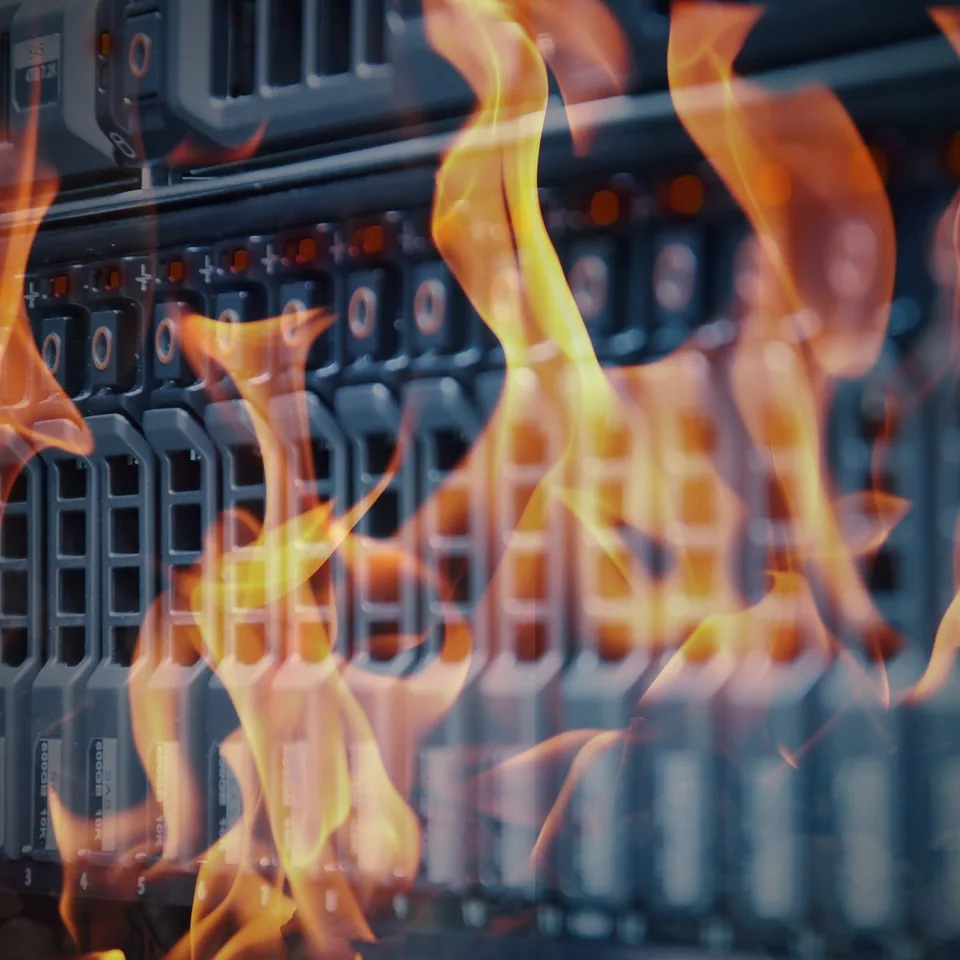
Equipment hidden inside an exhibit still has to shed heat. A useful cooling design begins with the installed heat load, the surrounding conditions, the equipment’s limits and a serviceable route for heat to leave the enclosure.
There is no single temperature rule that predicts the life of every electronic component. Use the selected equipment’s operating limits and manufacturer guidance, then verify the assembled installation under its intended load.
TECHNICAL DETAILA fan needs a complete heat path
Open the engineering detailClose this sectionLook for the red circuit symbol for engineering detail.
An internal fan can move heat between components and improve local circulation. It cannot by itself establish that a closed cabinet can reject enough heat to its surroundings. Heat must ultimately pass through the enclosure or leave through a designed cooling route.
Begin by identifying the heat-producing equipment and how it takes in and exhausts air. Keep the equipment’s required clearances. Check whether the chosen enclosure can dissipate the heat or whether it needs ventilation, a heat exchanger or active cooling.
Choose the airflow strategy for the enclosure
In a suitable indoor installation, a filtered supply can introduce clean air along a controlled path and maintain modest positive pressure. This can reduce unfiltered air entering through gaps. Filters, fan capacity, outlets and service intervals are part of that design.
Extraction can also be part of a valid solution when make-up air and its route are controlled. The correct arrangement depends on the equipment’s airflow, enclosure geometry, heat load, dust, humidity and surrounding temperature. Positive pressure is not a guarantee that every component receives enough cooling.
Fresh-air cooling needs an adequate temperature difference between the surrounding air and the permitted cabinet temperature. A hot or contaminated environment may call for another method. Manufacturer resources such as nVent HOFFMAN’s climate-control selection distinguish those options.
Prevent avoidable recirculation
Locate intake and exhaust so that warm discharge is not immediately drawn back in. Baffles or ducts can help separate those paths and direct air where it is needed. Scenic cavities, neighboring equipment and crowded cable routes can change the behavior of an otherwise sensible cabinet layout.
Low intake and high exhaust can be useful, but the final path should follow the actual equipment and enclosure. The important result is adequate cooling at each relevant inlet and component location, rather than a fixed rule about fan placement.
Verify the installed conditions
- Establish the intended equipment load and the relevant worst-case surrounding conditions.
- Measure temperatures at meaningful locations after the system has stabilized.
- Check airflow with doors, scenic panels, filters and cable entries in their normal operating state.
- Provide accessible filters, fans and inspection points, with a practical maintenance interval.
- Allow for the equipment’s shutdown, restart and fault behavior.
Manufacturer airflow guidance relates cooling capacity to heat load and the permitted temperature rise. The selected equipment and enclosure requirements remain the basis for the project design.
Resolve the detail while the design is flexible
Equipment position, ventilation openings, acoustic treatment and service access affect both the experience and the architecture. Bringing them into the design conversation early makes the final installation easier to operate and maintain.